
Many early learning settings follow a fairly defined pathway. Children may be expected to sit for longer periods, follow group instruction, complete worksheets, and learn through repetition of content, sometimes earlier than their developmental stage is ready for.
For some children, this works well.
For others, it can feel like the path is too narrow.
A child may be bright and capable, yet struggle with the usual expectations. They may learn best through movement, hands-on experience, imagination, or quiet observation. They may need more time before formal academic learning feels natural.
These are often the children families describe as non-traditional learners, not because there is something “wrong,” but because they do not thrive in the typical mainstream learning approach in Thailand.
A Waldorf-inspired approach supports these children by meeting the whole child: body, heart, and mind; and by allowing development to unfold at the right time.
At Tawan Sprouts, we bring a Waldorf-inspired approach into everyday childcare in Bangkok. Our focus is calm rhythm, child-led play, practical life, and warm guidance so children can grow with confidence and readiness.
What “non-traditional” can look like in mainstream society
Non-traditional learners may include children who:
- do not respond well to early worksheets or long sitting time
- learn best through play, movement, and real-life activities
- feel stressed by comparison, performance, or pressure
- take longer to speak or prefer to observe first
- are sensitive to noise, crowds, or frequent transitions
- have strong creativity but lose interest in repetitive tasks
- are bilingual or multilingual and develop language in a different rhythm
This is not about labelling children. It is about recognising that learning styles and timelines vary.
1) A calmer pace reduces pressure (and helps learning open)
Many children struggle not because they cannot learn, but because they are asked to learn in a way that does not fit their developmental stage of growth.
A Waldorf-inspired environment is more unhurried. Children are given time to arrive, settle, and engage. When pressure reduces, attention improves. Curiosity returns. Confidence grows.
This matters especially for children who shut down when they feel evaluated or under pressure.
2) Rhythm supports children who need predictability
In fast-paced city life, children often experience many transitions—traffic, schedules, lessons, outings, multiple caregivers.
A steady daily rhythm supports emotional regulation. When children know what comes next, they feel safer. And when they feel safer, they learn more easily.
At Tawan Sprouts, predictable routines and gentle transitions help children feel held without becoming rigid.
3) Learning through the body
A mainstream learning path can sometimes prioritise early abstract learning. But many young children learn best through the body.
Waldorf-inspired early years honour this by valuing:
- outdoor play
- movement and balance
- hands-on practical life (pouring, kneading, sweeping, gardening)
- sensory-rich experiences with natural materials
For children who struggle with sit-and-do tasks, this approach makes learning accessible again.
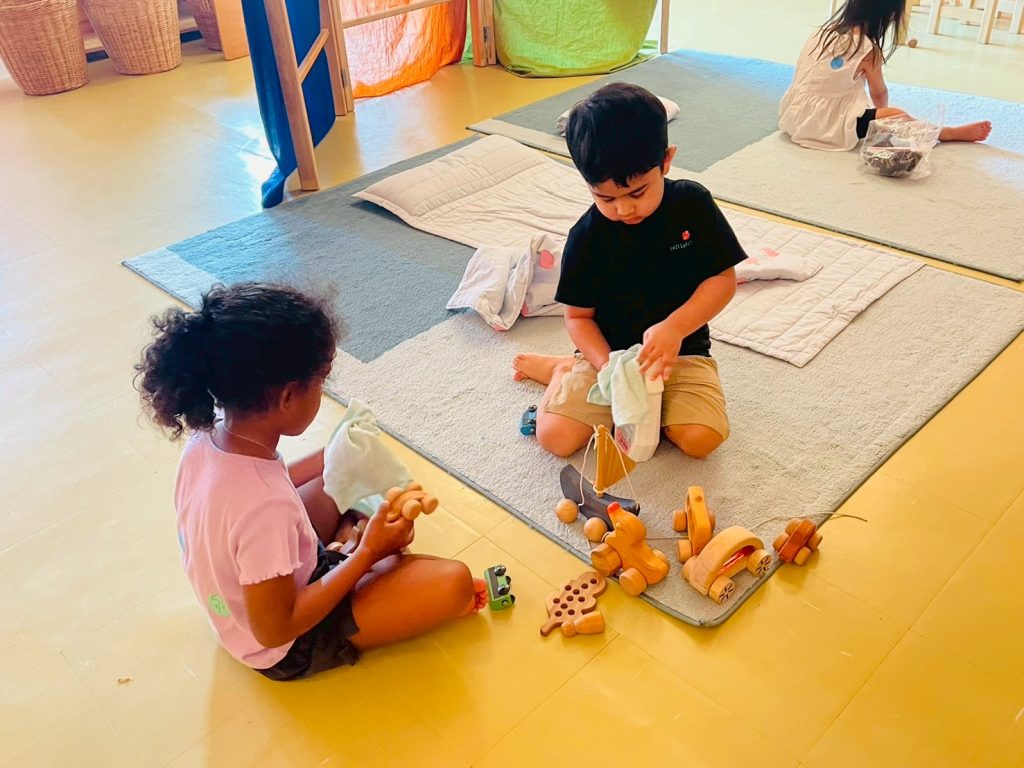
4) Play-based learning honours different developmental timelines
Non-traditional learners often develop unevenly.
A child may be strong in imagination and storytelling, yet slower in fine-motor tasks. Another child may be quiet in group settings, yet deeply attentive and thoughtful.
In child-led play, children naturally practise what they need most:
- language through role-play and storytelling
- social learning through negotiation and repair
- problem-solving through building and experimenting
- self-control through planning, persisting, and adapting
Because play is meaningful, children stay engaged longer. This builds focus and readiness for later learning.
5) Gentle boundaries support children who react strongly to pressure
Some children have big energy or strong will. They need boundaries—but harshness can make them escalate.
In a Waldorf-inspired approach, guidance is:
- clear and simple
- calm and consistent
- grounded in relationship and modelling
Instead of constant correction, educators shape the environment and rhythm so children can succeed.
This can support children who struggle in highly controlled or highly competitive settings.
6) Warm relationships help children feel safe to try
In early childhood, children learn best when they feel secure with their caregivers.
At Tawan Sprouts, we prioritise connection before expectation. We observe carefully. We learn each child’s cues. We support separation gently. We allow children to warm up at their own pace.
When children feel understood, they become more willing to explore, take social steps, and try new challenges.
7) Readiness for school comes from strong foundations
Families sometimes worry:
“If we do less formal academics now, will my child be ready later?”
A Waldorf-inspired approach supports readiness through foundations that schooling relies on:
- attention and focus
- emotional regulation
- language development through real communication
- social confidence
- independence and practical skills
- curiosity and a love of learning
These are the capacities that help children adapt—whether they eventually move into a mainstream education programme or another education system.
What parents often notice over time
When children who do not fit the standard learning path are supported with rhythm, play, and warm guidance, families often notice:
- smoother transitions
- more confidence in groups
- stronger emotional regulation
- longer attention during play
- increased independence in daily tasks
- a calmer relationship with learning
Every child is unique. Growth is not linear. But when children feel safe and understood, development has room to unfold.
Enquire with Tawan Sprouts
If your child does not thrive in the typical learning expectations in Thailand—or if your family is seeking a calmer, more child-centred foundation—we welcome you to enquire.
At Tawan Sprouts, our Waldorf-inspired childcare approach supports children through rhythm, self-directed play, practical life, and warm guidance.