
Many parents in Bangkok share a similar question:
“The world is changing so quickly. How can I make sure my child will be ready?”
It is a thoughtful concern. Technology shifts, new careers appear, and the pace of life keeps increasing. In this kind of world, it can be tempting to focus early childhood on “future skills” as quickly as possible.
A Waldorf-inspired approach offers a different path.
Rather than training children for a specific future we cannot predict, Waldorf education focuses on developing what children will always need: a strong inner foundation. Confidence. Flexibility. Emotional resilience. A love of learning. Social understanding. Imagination and real problem-solving.
These capacities help children adapt not only to school, but to life. Future-ready does not mean rushed.
In early childhood, the most important development is not academic acceleration. It is healthy growth of the whole child.
When children are pushed into abstract learning too early, they may memorise quickly but often at the cost of confidence, curiosity, or emotional steadiness.
Waldorf education honours a child’s developmental stages. It supports learning at the right time, in the right way.
The result is not “behind.” The result is grounded.
1) Adaptability begins with imagination
In a fast-changing world, the ability to think creatively is essential.
Imagination is not only for art. Imagination is how children learn to:
- explore possibilities
- create solutions
- try again after failure
- see more than one perspective
In Waldorf-inspired early years, imaginative play is protected and valued. Through play, children practise flexible thinking every day.
A stick becomes a spoon, a wand, a fishing rod. A cloth becomes a river, a cape, a tent. Children learn that meaning can be created—not only consumed.
This is a future skill.
2) Emotional resilience supports lifelong learning
Children who can manage emotions are better prepared for school, friendships, and challenges.
In Waldorf education, emotional resilience is supported gently through:
- consistent daily rhythm
- warm, secure relationships with educators
- storytelling and role-play
- unhurried time to settle and regulate
When children experience calm guidance rather than constant correction, they learn that feelings are manageable.
A child who can recover from frustration, ask for help, and try again is truly future-ready.
3) Social intelligence grows through real relationships
The future will require collaboration. Yet social skills cannot be rushed or forced.
In a Waldorf-inspired setting, children practise social learning through shared daily life:
- cooperative play
- taking turns and negotiating roles
- helping with practical tasks
- learning repair after conflict
Educators model respectful language and attentive listening. Children learn by imitation.
These experiences build empathy, communication, and confidence with others.
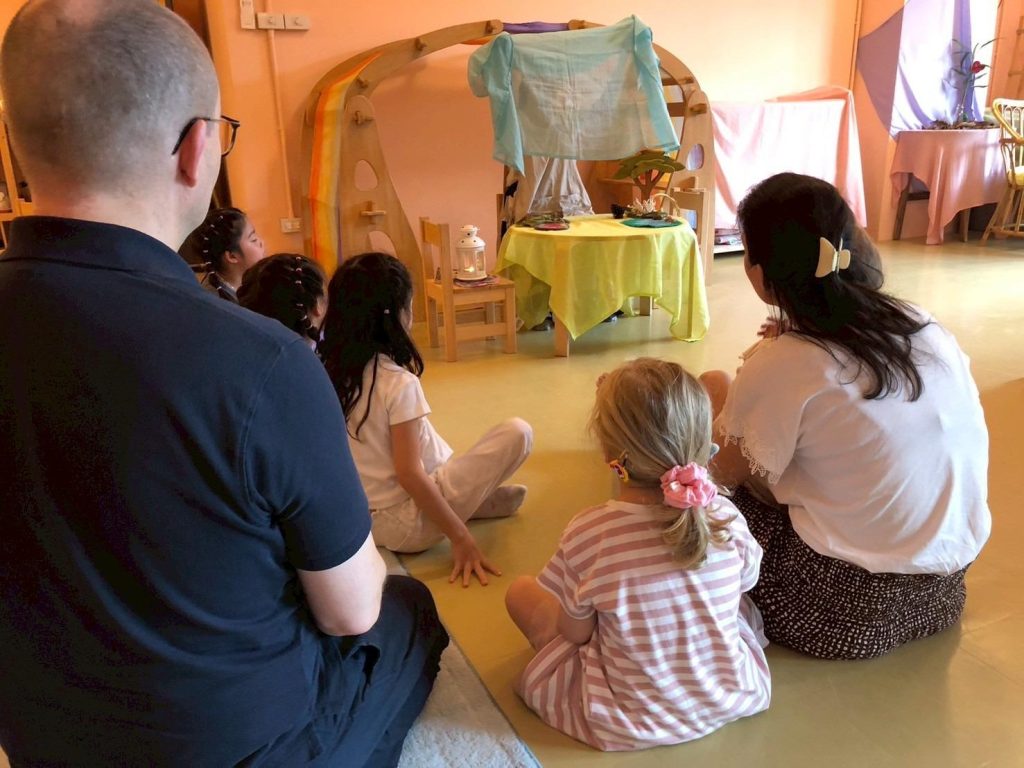
4) Strong attention and focus are built through meaningful work
In a world filled with fast content, focus has become a rare skill.
Waldorf education supports attention by offering:
- open-ended play
- simple, natural materials
- a calm, uncluttered environment
- practical life activities that have real purpose
When children knead dough, water plants, fold cloths, or tidy carefully, they practise concentration without pressure.
These small experiences build the foundations for later academic learning.
5) Confidence comes from doing, not performing
Children develop healthy confidence when they feel capable.
Waldorf-inspired early years allow children to:
- try independently
- repeat until mastery feels real
- contribute to the community
- experience success through effort
This kind of confidence is stable. It does not depend on being “the best.” It comes from knowing, “I can learn.”
That mindset prepares children for a world where they will need to keep learning, again and again.
A quiet advantage for the future
When families hear “Waldorf,” they sometimes ask whether children will be prepared for modern life.
The answer is yes, but in a deeper way.
Rather than beginning with screens or abstract concepts, Waldorf education strengthens the human capacities that technology cannot replace:
- creativity
- empathy
- resilience
- independent thinking
- real communication
These are timeless qualities.
And in a fast-changing world, timeless qualities are exactly what helps children adapt.
Enquire with Tawan Sprouts
At Tawan Sprouts, our Waldorf-inspired childcare approach supports children through rhythm, meaningful play, practical life, and warm guidance.
If you would like to learn more about whether this approach is the right fit for your child and your family, we invite you to enquire with us.